Operations Manager or Operations Architect: Which Should You Hire First?
Both roles are valuable, but they solve opposite problems, and hiring them in the wrong order is one of the most common and expensive mistakes growing businesses make. Here is how to decide which one your business needs first, especially when budget is tight.

Founder & CEO · Navigator · Sudbury, Ontario
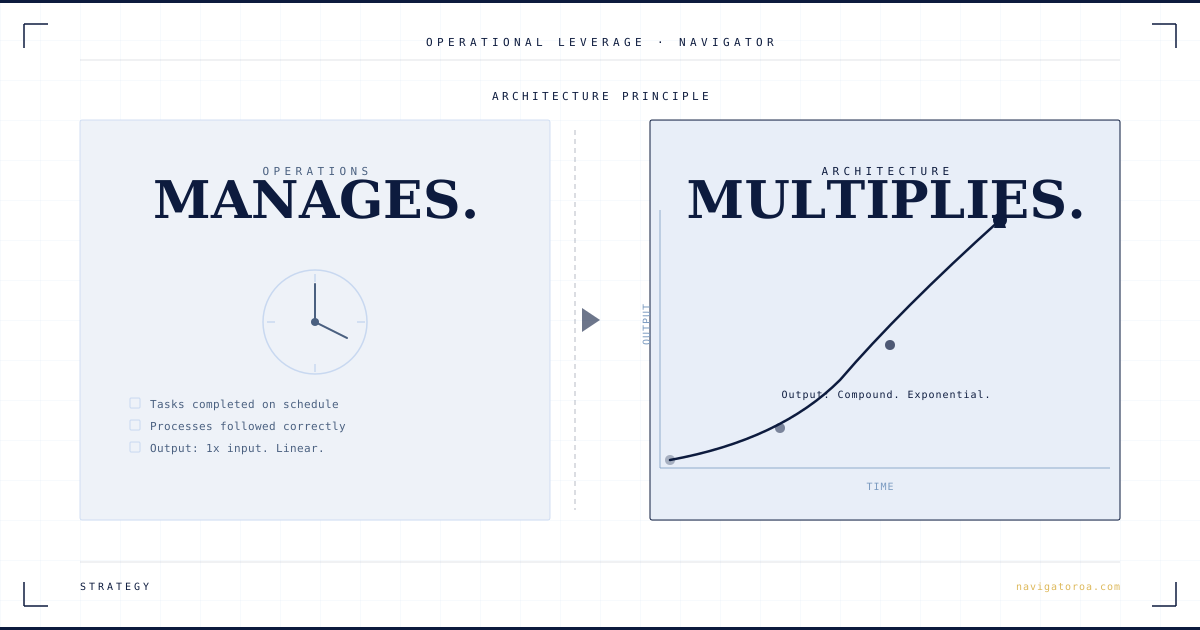
If you can only afford one operational hire right now, hire the architect first. That is the short answer, and it surprises most Founders, because the instinct is to hire the manager, the person who will run the day-to-day and take work off your plate. But hiring a manager before you have systems to manage is like hiring a pilot before you have built the plane. This post is about why the sequence matters, and how the two roles work together once you have both.
We want to be clear about what this post is and is not. The distinction between the two roles, what a manager does versus what an architect does at a conceptual level, is covered thoroughly in Why a Company Needs an Operations Manager and an Operations Architect. We are not going to repeat that here. This post takes the practical hiring-sequence angle: which one comes first, why, and how they divide the work day to day once both exist.
"A manager runs the system you have. An architect builds the system you need. If you do not yet have systems worth running, a manager will spend their days improvising, and you will have paid for a bottleneck relief valve instead of a bottleneck removal."
The Two Roles, in One Sentence Each
Just enough definition to make the sequencing clear.
An operations manager runs the existing operation. They keep the work moving, coordinate the team, hit the deadlines, and hold the day-to-day together. Their value is execution within the current structure.
An operations architect designs the structure itself. They build the processes, decision frameworks, automation, and visibility systems that the operation runs on. Their value is not doing the work, it is building the machine that makes the work repeatable and delegatable.
The critical insight is that these are not more-senior and less-senior versions of the same job. They are different jobs. One multiplies output by design, the other maintains output through effort. Confusing them is the root of the sequencing mistake.
Why the Architect Comes First When Budget Is Tight
Here is the reasoning most Founders miss.
When you hire an operations manager into a business that has no documented systems, that manager has nothing to manage. So they do what any capable person does in a vacuum: they improvise. They hold the operation together through personal effort, heroics, and memory, exactly the way you have been doing. You have not removed the bottleneck. You have hired a second version of it, and now two people carry the business in their heads instead of one.
An operations architect, by contrast, changes the underlying structure. They build the documented processes, the decision rights, the automation, the dashboards, so that the operation can run on systems rather than on any individual's continuous presence. Once those systems exist, a manager can genuinely manage them, and even a modestly experienced manager becomes effective, because the structure is doing the heavy lifting.
The sequence, then, is architecture first, management second. Build the machine, then hire someone to run it. Do it in the reverse order and you pay a manager's salary to keep improvising inside a broken structure, which relieves your symptoms briefly while leaving the disease untouched.
This is especially decisive when budget is tight and you can only fund one role. The architect's work leaves behind permanent assets, the systems keep working after the engagement, whereas the manager's work evaporates the moment they stop showing up. When money is scarce, buy the thing that compounds.
The Operations Audit: 25 questions that reveal whether your business needs building or running first.
FREE · SCORED ON SCREEN IN ABOUT 7 MINUTES
Reading about the problem? Score your own operations.
25 checks, 5 pillars, about 7 minutes. Your gaps appear on screen.
The Budget Reality: You Can Rent the Architect
There is a practical wrinkle. A senior operations architect is expensive to hire full-time, and the architectural work is front-loaded, it is intense during the build and lighter afterward. That is a poor fit for a permanent salaried hire, because you would be paying a full-time rate for a role whose heaviest lifting is temporary.
This is exactly why the fractional COO or fractional operations architect model exists. You bring in the senior architect for the build phase, when their value is highest, and then step down to a lighter footprint once the systems are in place. Navigator's build engagement runs $5,000 to $10,000 per month at 10 to 15 hours per week over 10 to 16 weeks, exactly the window in which the architectural work gets done. Afterward, an ongoing retainer at $2,000 to $5,000 per month keeps the systems maintained and improving. Across the full range, fractional engagements run $3,000 to $15,000 CAD per month.
Compare that to hiring a full-time operations executive at $150,000 to $300,000 per year, roughly $12,500 to $25,000 per month, plus $20,000 to $50,000 to recruit the role. For most businesses under $5M, renting the architect for the build and keeping a light retainer afterward is both cheaper and better sequenced, because you pay for intensity only when you need it.
How They Work Together Once You Have Both
The roles are not rivals. Once the architecture exists, the manager becomes far more effective, and the two divide the work cleanly.
The architect owns the how-it-should-work. They keep improving the systems, redesign processes as the business grows, add automation, and evolve the decision framework as complexity increases. Their attention is on the structure and the future.
The manager owns the it-is-working. They run the daily operation within the architecture, coordinate the team, handle the exceptions, and keep the standards enforced. Their attention is on execution and the present.
Day to day, the difference shows up in what each person does when a problem appears. The manager solves the instance: this client is unhappy, so they fix it now. The architect asks why the instance happened and changes the system so it stops recurring. You need both reflexes, but you need them in the right order. Build the system with the architect, then hand the running of it to the manager, and the two functions reinforce each other instead of overlapping.
A Simple Decision Rule
If you are staring at a single open headcount and trying to decide, use this test.
Ask whether your business has documented, delegatable systems that a competent manager could actually run. If the honest answer is no, that your operation currently runs on your presence and memory, then you have a building problem, not a running problem, and you need the architect first. Hiring a manager into that situation just adds a person to the improvisation.
If the honest answer is yes, that you have real systems and what you lack is someone to run them consistently, then you have a running problem and a manager is the right next hire.
Most businesses at the $1M stage are in the first camp and mistakenly shop for the second. That single misdiagnosis costs quarters and salaries.
The Bottom Line
Architecture before management. Build the machine, then hire someone to run it. When budget forces a single choice, the architect wins, because architectural work leaves behind systems that keep paying off, while management without systems is just a more expensive version of the bottleneck you already have. And because the architect's work is front-loaded, the fractional model lets you buy that intensity without committing to a full-time executive salary.
Navigator has done this architectural work since 2002, more than 25 years, across over 1,000 leaders, from Sudbury, Ontario. If you are about to make an operational hire, the most valuable thing you can do first is figure out which problem you actually have.
45 minutes. We diagnose whether your business needs building or running first, and in what order to hire.
FREE · SCORED ON SCREEN IN ABOUT 7 MINUTES
OPERATIONAL LEVERAGE, WEEKLY DISPATCH
Get frameworks like this every week.
No padding, no filler, just field-tested operational tactics for Canadian Founders.
Prefer LinkedIn? Subscribe to Operational Leverage on LinkedIn.
Where is your business leaking growth?
25 checks across 5 operational pillars. Your score and your gaps appear on screen in about 7 minutes.